
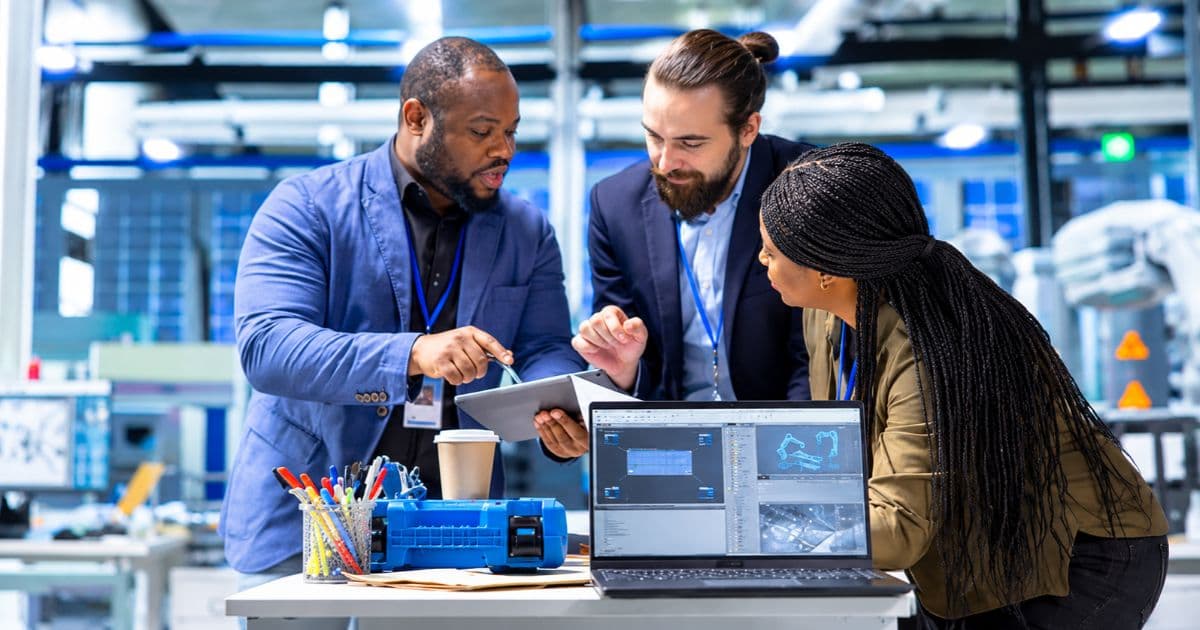
A new product can sit in limbo for months before a single customer sees it. Teams wait on steel molds, argue over large order sizes, and watch overseas shipments slip while a rival gets to market first.
For many firms, that slow start is the hidden cost of making things the old way.
Advanced manufacturing is rewriting that timeline. Additive methods now let smaller makers produce custom parts just in time with far less tooling time and cost. What follows is the new launch path, step by step, along with the tools behind it.
Then come the cases where it beats old-style tooling, plus a guide to picking the right partner.
From Idea to Shelf: The New Route to Market
The short answer is speed. With advanced manufacturing, one digital file drives the prototype, the test parts, and the first production run. Steps that once took months can now happen in days. That is why 3D printing for businesses has moved from the lab bench into the launch plan.
Where the Old Timeline Dragged
In a classic launch, a concept moved to design review and then to a tool shop. Building a steel mold often took weeks or months, and suppliers usually wanted thousands of units per order. Any flaw found in testing meant fixing the tool and paying for it again.
How Digital Workflows Compress Each Stage
Today the path looks very different. Designers review a CAD model on screen, print a prototype overnight, and test it the next day. Pilot runs of a few dozen units come straight off the printer, with no mold to approve.
Picture a hardware startup working on a plastic housing for a sensor. The team prints a version on Monday, finds a loose snap fit, and adjusts the file. Working with a 3d printing service provider that handles both design and printing, the team can run three design rounds in one week. By Friday, the housing is ready for a small pilot batch.
The Technologies Behind 3D Printing Manufacturing Services
Speed comes from matching each part to the right process. Most 3D printing manufacturing services offer several methods, and each one fits a different stage of the launch.
Additive Processes and What Each Does Best
- FDM: low-cost prototypes in ABS or PLA, good for fit checks, jigs, and fixtures.
- SLA: smooth resin parts with fine detail, useful for models that must look final.
- SLS and MJF: tough nylon parts that need no support structures and are often strong enough for end use.
- Metal printing (DMLS): aluminum or stainless steel parts for brackets, tools, and pieces that face heat.
For larger shell parts like covers or trays, thermoforming often fills the gap. It shapes heated sheet plastic over a mold, which suits wide, thin parts.
Digital Design, Simulation, and Quality Control
Simulation software lets engineers check stress and fit before they print, which cuts the number of test rounds. Simple design habits also lower cost, such as adding rounded edges or merging several parts into one.
On the shop floor, live monitoring and post-print checks keep each batch consistent. That matters once a part moves from prototype to product.
Traditional vs. On-Demand Production: Which Fits Your Launch?
Additive methods do not win every time. Injection molding still gives the lowest cost per part at very high volumes. The large tooling bill gets spread across tens of thousands of units. Printing wins where designs change often, volumes stay low, or shapes are too complex to mold.
| Launch Scenario | Best-Fit Method | Typical Lead Time | Upfront Cost | Design Flexibility | Key Risk |
| Early prototype | Additive (FDM, SLA) | 1 to 5 days | Very low | Very high | Testing in non-final materials |
| Pilot batch (10-100 units) | Additive (SLS, MJF) | 1 to 2 weeks | Low | High | Per-part cost above molding |
| Low-volume custom (100-1,000 units) | Additive or thermoforming | 2 to 4 weeks | Low to moderate | High | Finish and tolerance limits |
| Bridge production | Additive while tooling is built | Days to weeks | Low | Moderate | Planning the switchover |
| High-volume mass production | Conventional tooling | Several weeks for tooling | High | Low | Costly late design changes |
The pattern is easy to read. The earlier the stage, and the likelier the design is to change, the more on-demand methods pay off. A late change can scrap a mold worth thousands of dollars, while a printed part only needs a new file.
Many teams therefore print through launch, then commit to tooling once demand is proven.
Reshoring, Supply Chains, and Low-Volume Launches
On-demand production also changes where you make parts and how many you need. Global additive manufacturing revenues reached $24.2 billion in 2025, up 10.9% from the year before. That growth is a sign this route is now mainstream.
Less Inventory, Less Exposure
When parts are printed close to where they are used, firms need fewer warehouses full of stock that might go out of date. They also face less risk from tariff swings and shipping delays.
For a small business, a launch can start with 50 to 500 units instead of a large order that ties up cash for months.
Domestic Production and Compliance Needs
Regulated sectors add another layer. Medical, aerospace, defense, and electronics buyers often need ISO 9001 quality systems, ITAR handling, and traceable material lots. Some also require ratings such as FST or ESD-safe.
Working with professional 3D printing services in the U.S. makes audits and paperwork easier, because the whole chain stays in one country.
How to Choose a Manufacturing Partner?
Selecting the right manufacturing partner can save you valuable time, while the wrong partner can silently cost you weeks. A little research will help make finding the correct 3D printing service provider an easy task.
What to Look for in a Custom 3D Printing Company
Before committing to a custom 3D printing company, make sure they:
- Handle both design and manufacturing in-house.
- Work with different materials, including nylon, resins, and metals.
- Follow clear quality control processes, from design review to final inspection.
- Hold certifications relevant to your industry.
- Provide realistic delivery timelines and regular project updates.
What to Prepare Before Requesting a Quote
A complete request gets a faster and more accurate price. Have these details ready:
- CAD files, ideally in STEP or STL format
- Material and tolerance needs
- Quantity, both now and later
- Finishing needs like paint, smoothing, or inserts
- Target timeline and the setting the part will face
Most providers then follow three steps: a quote, a review of your file by an engineer, and production.
To Wrap Up
Advanced Manufacturing can reduce lead times. With rapid prototyping, you can get your products much quicker. Pilot runs can be done without tooling, and small runs can be shipped with little risk to inventory. Traditional tooling is still used but usually is a later stage in the process.
Try taking 1 item from your pipeline that causes delays in your process (Housing / Bracket / Fixture). Plug it into the table below, print off a few examples, and see how much faster and cheaper it could be compared to your current method.
This will give you an indication if you should incorporate on-demand manufacturing into your next launch.
FAQ’s
What are the trends in Advanced Manufacturing in the US currently?
Additive manufacturing is becoming very popular. Automation is being pushed within factories. Digital twinning is also coming through. Many companies are manufacturing back in the US to reduce lead times. Sensor and data solutions are also becoming more common. This results in less downtime. Sustainability goals are being pushed, which means processes that make more efficient use of materials and produce less waste are becoming more common.
Is AI Taking Over Manufacturing Jobs?
AI is transforming roles within manufacturing. Inspection and scheduling tasks that are repetitive are now often automated. There is increased demand for technicians, data analysts, robot programmers, and process engineers. Those who invest in developing their digital skills and managing automated processes tend to be in a better position. However, not all industries are moving at the same rate, and it depends on the size of the plant.
What is the future of manufacturing?
Many analysts are pointing towards combining AI, smart factories, and additive manufacturing. This allows for flexible and on-demand manufacturing. Designs can be rapidly manufactured from digital files. New materials (High performance plastics / Metal Alloys) are expected to increase the range of parts that can be manufactured in this way.
RELATED POST: AI PDF Analysis and Document Extraction for Business