
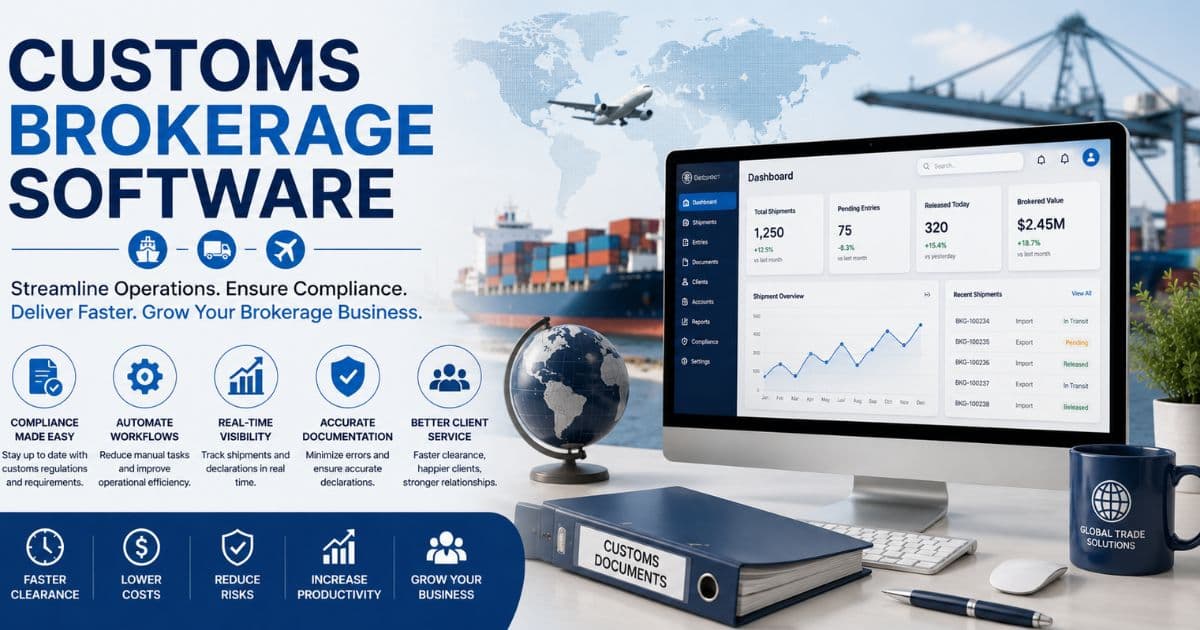
International shipping involves multiple processes, regulations, and documentation requirements that must be completed accurately. Customs brokerage software has become an essential tool for businesses that manage imports and exports, helping simplify customs procedures while improving operational efficiency. As global trade grows more complex, organizations increasingly rely on customs brokerage software to streamline workflows, reduce manual tasks, and maintain compliance with customs regulations.
Whether handling a few shipments or managing high shipping volumes, understanding the value of customs brokerage software can help businesses improve accuracy, save time, and strengthen their international logistics operations.
What Is Customs Brokerage Software?
Customs brokerage software is a digital solution designed to assist with preparing, organizing, and managing customs documentation for international shipments. It helps businesses maintain accurate shipment records, generate customs declarations, organize import and export documents, and improve communication throughout the customs process.
By automating repetitive tasks, customs brokerage software reduces paperwork while improving the speed and accuracy of customs-related operations.
Why is Customs Brokerage Software Important?
Managing international shipments manually can be time-consuming and prone to errors. Customs brokerage software provides several important advantages that improve operational performance.
Increased Accuracy
Automated data entry reduces the likelihood of documentation mistakes that may cause customs delays or additional inspections.
Faster Processing
Digital workflows help prepare shipment documentation more quickly, allowing customs submissions to be completed efficiently.
Better Compliance
Using customs brokerage software helps businesses maintain organized documentation and follow customs regulations consistently.
Improved Productivity
Automation minimizes repetitive administrative work, allowing teams to focus on higher-value logistics activities.
Key Features of Customs Brokerage Software
Modern customs brokerage software includes a variety of tools that simplify customs management.
Document Management
The software stores invoices, packing lists, declarations, and shipping documents in one centralized location for easy access.
Shipment Tracking
Users can monitor shipment progress and stay informed about customs processing updates throughout the transportation journey.
Automated Data Validation
Validation features identify incomplete or inconsistent information before customs documents are submitted.
Reporting and Recordkeeping
Comprehensive reporting functions help maintain historical shipment records and support future compliance reviews.
These capabilities make customs brokerage software an effective solution for improving customs operations.
Benefits for International Trade
Organizations using customs brokerage software often experience measurable operational improvements.
Reduced Documentation Errors
Automation minimizes manual input, helping businesses submit more accurate customs information.
Enhanced Supply Chain Visibility
Centralized shipment information allows businesses to monitor customs progress and respond quickly when additional documentation is required.
Faster Decision-Making
Access to organized shipment data enables logistics teams to resolve customs issues more efficiently.
Greater Operational Consistency
Standardized digital processes ensure customs procedures remain consistent across multiple shipments.
Best Practices for Using Customs Brokerage Software
To maximize the benefits of customs brokerage software, businesses should follow several best practices.
Keep Information Updated
Regularly update shipment data, product classifications, and documentation to maintain accuracy.
Train Employees
Provide staff with proper training to ensure they understand software functions and customs procedures.
Standardize Documentation
Using consistent documentation formats improves efficiency and reduces submission errors.
Review Performance Regularly
Analyze shipment processing times and documentation accuracy to identify opportunities for improvement.
Following these practices helps organizations achieve the greatest value from customs brokerage software.
Common Challenges Without Customs Brokerage Software
Businesses relying entirely on manual customs processes often encounter avoidable problems.
Manual Data Entry Mistakes
Typing errors and inconsistent documentation can delay customs approvals.
Lost Documentation
Paper-based systems increase the risk of misplaced shipment records and incomplete files.
Slower Processing
Manual document preparation requires more time and resources compared to automated workflows.
Limited Visibility
Without centralized information, tracking customs progress becomes more difficult.
Implementing customs brokerage software helps address these challenges while improving operational efficiency.
The Future of Customs Brokerage Software
Technology continues to reshape international trade. Future customs brokerage software solutions are expected to include more advanced automation, improved data integration, artificial intelligence for document validation, and enhanced analytics for shipment management.
As customs authorities continue adopting digital systems, businesses using modern software solutions will be better prepared to meet changing regulatory requirements and maintain efficient customs operations.
Organizations that embrace digital transformation today position themselves for greater flexibility and long-term success in international commerce.
Conclusion
Effective international shipping depends on accurate documentation, efficient workflows, and regulatory compliance. Customs brokerage software provides businesses with the tools needed to simplify customs procedures, reduce administrative burdens, and improve shipment processing.
By adopting customs brokerage software, organizations can enhance documentation accuracy, strengthen compliance efforts, improve supply chain visibility, and support smoother international trade operations. Investing in reliable digital customs management processes helps businesses remain competitive while preparing for the evolving demands of global commerce.
RELATED POST: AI SEO How Artificial Intelligence Is Transforming Search Engine Optimization